Learn about Excel with our Free Microsoft Excel Online Course!
Key Takeaways
- Outline view shows only the text of your slides in a clean format.
- You can print the outline from File → Print → Outline.
- Printing outlines saves ink and paper.
- It helps your audience focus on key points.
- You can edit fonts, bullets, and spacing before printing for better readability.
Why Print the PowerPoint Outline
Outline printing is a great strategy for anyone looking to save time and reduce their environmental footprint. By choosing to print just the outline of a PowerPoint presentation, they minimize the use of ink and paper. This method skips over the graphics and images that typically adorn full slides. It is useful for handouts in meetings or classrooms where the detailed content from the slides is what matters most.
Furthermore, they’re also simplifying the note-taking process for their audience. An outline presents information cleanly and concisely helping in better retention. It checks all the boxes:
- Simple
- Cost effective
- Eco-friendly
Table of Contents
How to Print Your PowerPoint Outline
Access Outline View
STEP 1: Open the presentation and go to the ‘View’ tab.
STEP 2: Choose ‘Outline View’ from the available options.
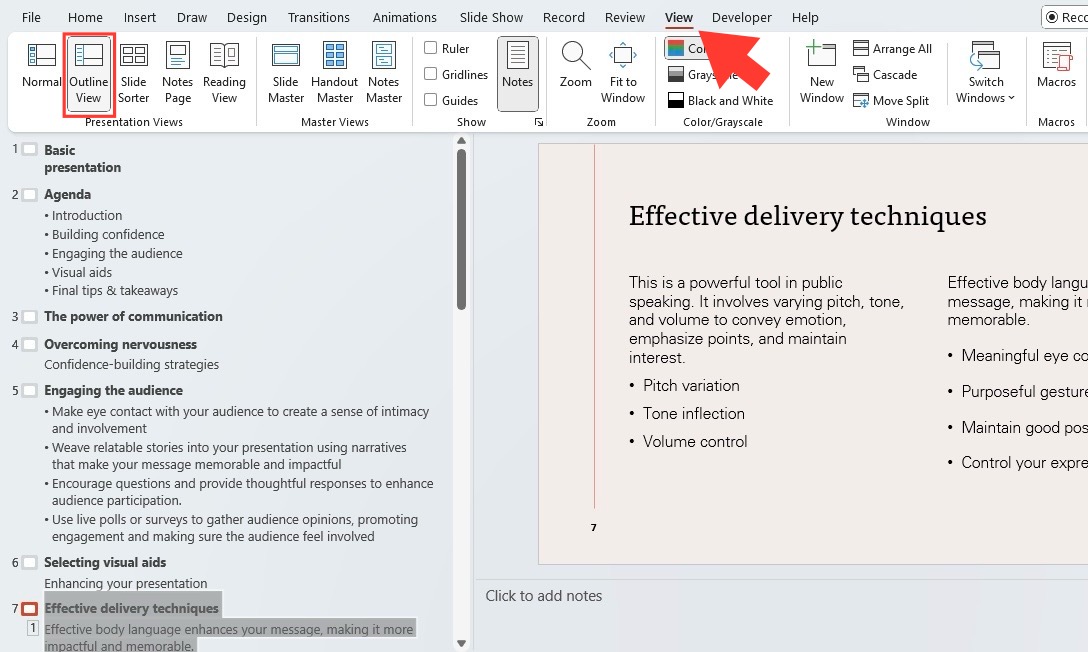
Your content reorganizes itself into a neat, hierarchical text structure.
You can turn the digital format into a physical copy by following the steps below:
STEP 1: Click ‘File’ and then ‘Print’.
STEP 2: In the ‘Settings’ section, open the drop-down that typically shows ‘Full Page Slides’ by default.
STEP 3: Select ‘Outline.’
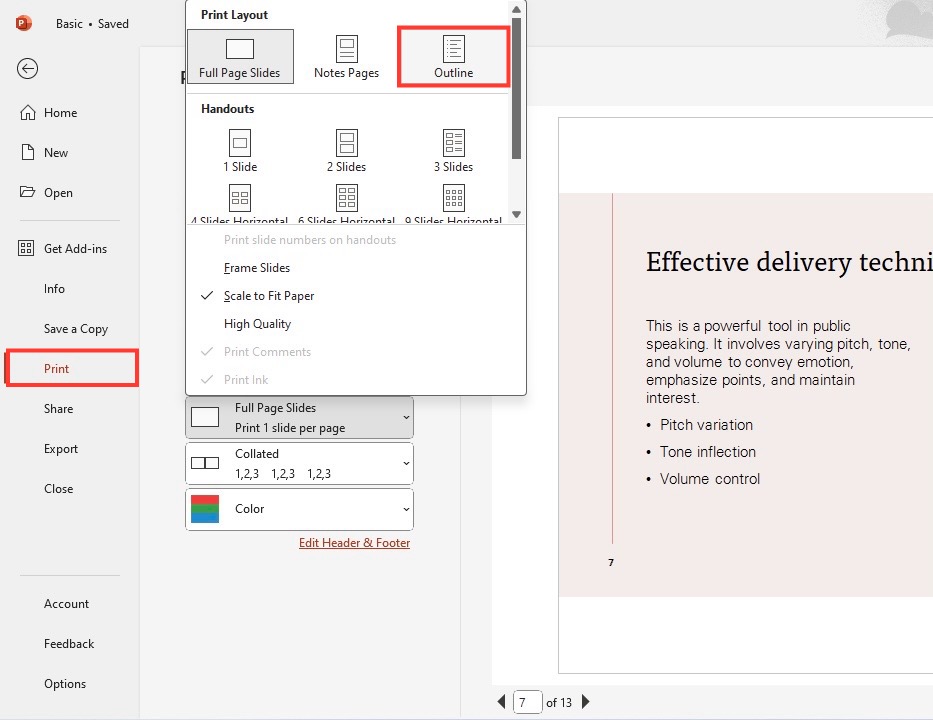
You’re now set to print the distilled essence of your presentation.
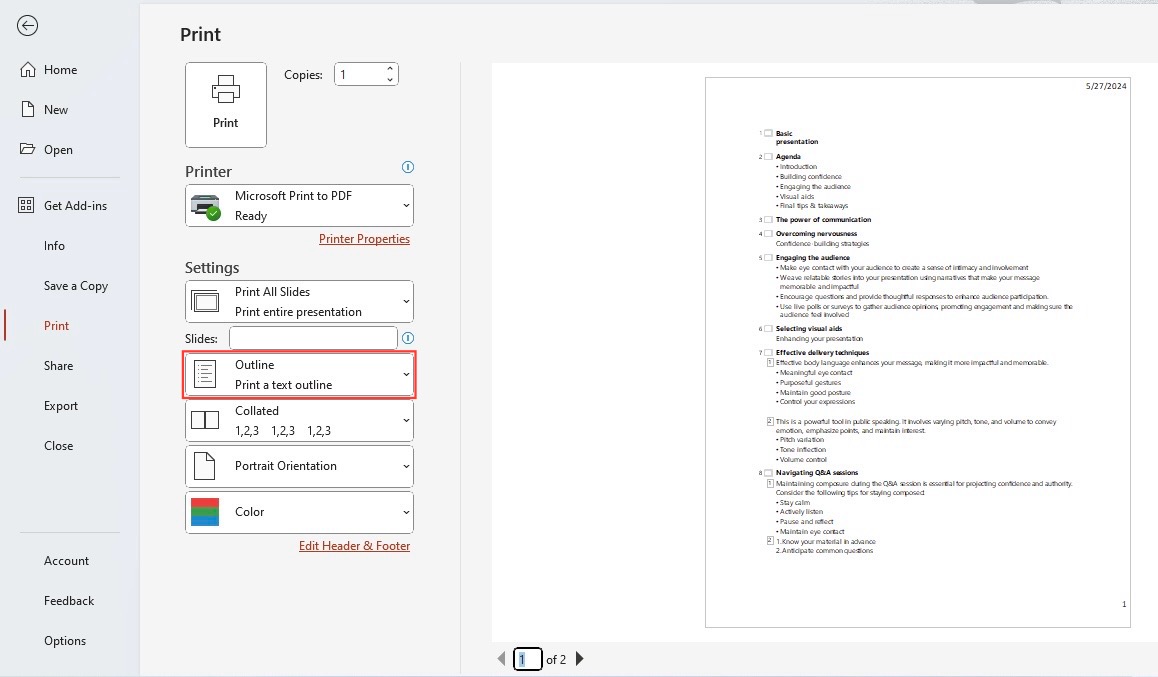
Customize Your Outline
STEP 1: Change the font size and style in Outline View to improve readability and match the tone of your presentation.
STEP 2: Adjust bullet points and indents to emphasize the hierarchy.
STEP 3: Simplify the language for a handout format.
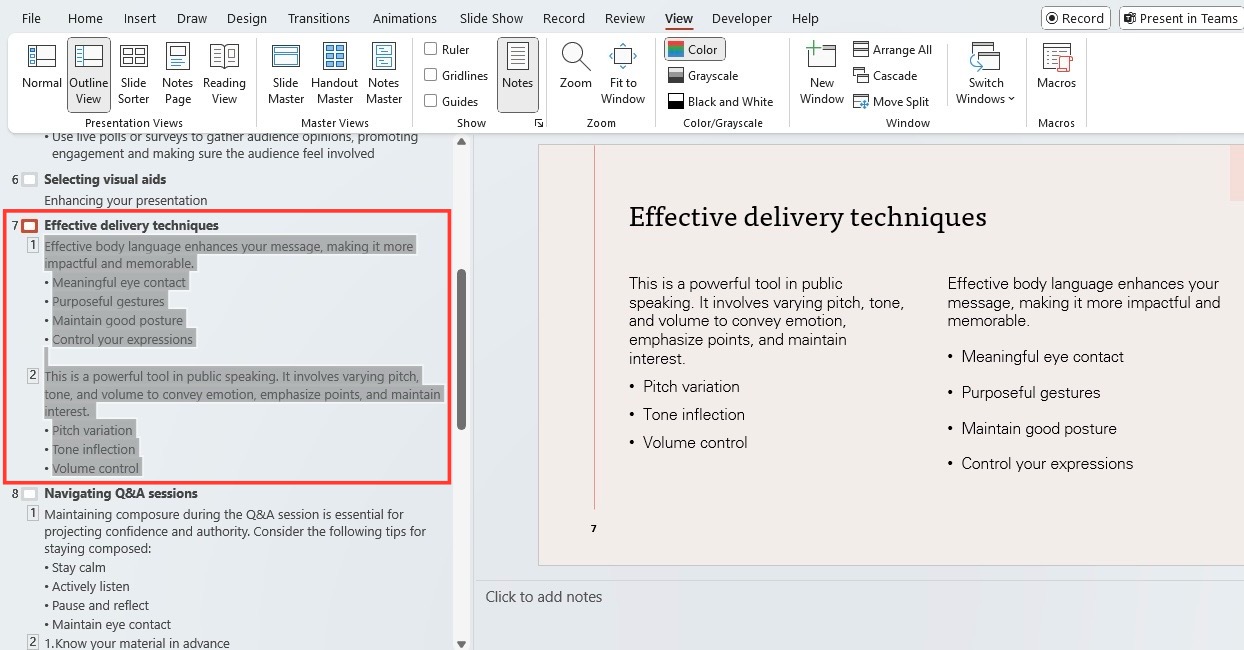
Every detail you change in the Outline View translates to a more digestible and useful handout. They improve the structure and legibility of your content by selectively bolding keywords and checking that the arrangement on the page guides the audience through your points logically.
It becomes a valuable companion to your spoken words. It helps your audience to track, understand, and remember your presentation long after it has concluded.
Benefits of Printing an Outline over Full Slides
Enhanced Focus on Key Points for Your Audience
Printing an outline can do wonders for your audience’s focus. By trimming away the extra ‘fluff’ that full page slides often have, the attendees are served the meat of your presentation without any distractions. This leads them to zero in on the key points and arguments you’re advancing.
Moreover, outlines encourage note-taking and active engagement. Your audience can quickly jot down notes beside the printed points, facilitating a deeper processing of the information you’re delivering. This can be particularly impactful in educational settings, where comprehension and retention are crucial.
Easy Transportation and Environmentally Friendly Option
Printing an outline is not only convenient but also kind to the planet. Since outlines typically contain only text, they use significantly less ink compared to full-page slides that often include images and colored backgrounds. This means fewer cartridges end up in landfills, and fewer resources are consumed in manufacturing.
Moreover, they’re lightweight and easy to transport. Whether they’re presenting at a meeting across town or at a conference overseas, carrying stacks of paper is less cumbersome when it’s just the outlines. They can bring just enough for their needs without the bulk.
Besides the practical benefits, being mindful of the environment enhances their brand or personal image as a conscientious and responsible presenter, aligning with the growing global emphasis on sustainability
.
Tips and Tricks for a Professional-Looking Outline
Selective Text Editing Before Printing
Before hitting that print button, taking a moment to selectively edit the text in your outline can have a big impact on the final product. Be on the lookout for any redundancies or overly technical language that might muddy the waters for your audience. They should strive for clarity and conciseness.
It also helps to tailor the text to the anticipated level of understanding of your audience. Will they be familiar with the jargon, or should it be simplified? Aim for language that includes everyone in the conversation.
After all, a printed outline is more than just a document—it’s a communication tool, and like all tools, its effectiveness depends on how well it’s crafted. With a bit of selective editing, your outline will not jut communicate, but it will resonate.
Adjusting Format and Layout for Readability
- Choose a legible font that is easy on the eyes; think Arial or Calibri, not just for aesthetics but also for inclusivity.
- Opt for font sizes that are readable when printed. Typically, anything below size 10 might strain the eyes.
- Utilize white space wisely. Generous spacing between points can aid in distinguishing between major ideas and details.
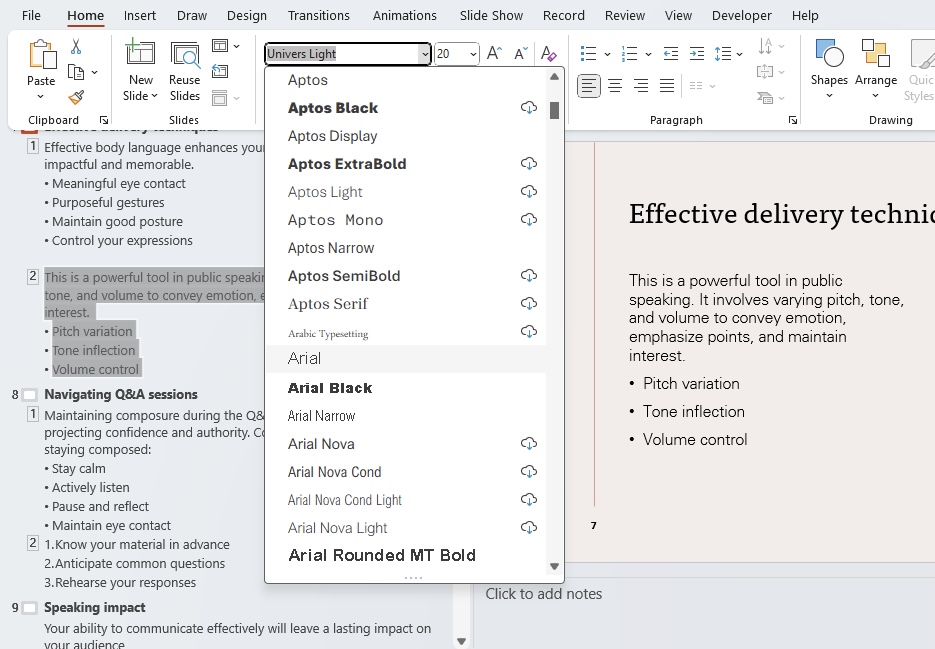
Lastly, if color is necessary for differentiation or emphasis, use it sparingly and with high contrast. This not only helps with readability but also ensures that the document is more accessible for those with color vision deficiencies.
Troubleshooting Common Issues
Dealing with Missing Content in Printouts
- Revisit your PowerPoint file and toggle the selection pane to identify all elements.
- Look for any text that is in a hidden shape or formatted to be invisible on the screen.
- Ensure that all relevant content is within the slide’s title or text placeholders as these are included in the outline view.
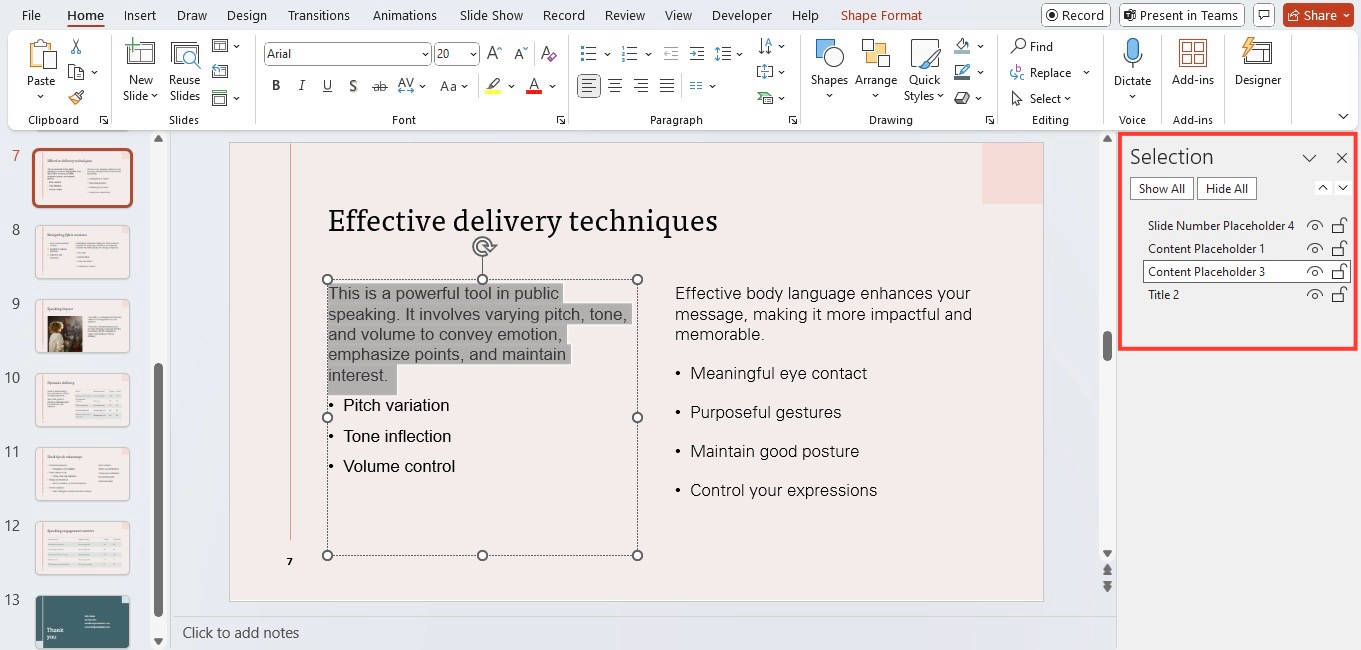
Solving Formatting Glitches Pre-Print
- Check for inconsistencies in font type and size across different slides, which might not translate well in the outline.
- Ensure that the color settings for print match what they see on the screen by reviewing ‘Color/Grayscale’ settings.
- Confirm that bullet points and numbering are carried over correctly by previewing the outline in the ‘Print’ menu.
FAQs
Can You Print Both Notes and Outline Together in PowerPoint?
No, in PowerPoint, they cannot print both the notes and the outline together directly. They need to choose either the ‘Notes Pages’ option to print slides with notes or the ‘Outline’ option to print just the text outline.
How to export a PowerPoint presentation as an outline?
STEP 1: With the presentation open, go to ‘File’ and then ‘Save As.’
STEP 2: Choose the location for the file, then click on the ‘Save as type’ dropdown menu.
STEP 3: Select ‘Outline/RTF(*.rtf)’ from the list.
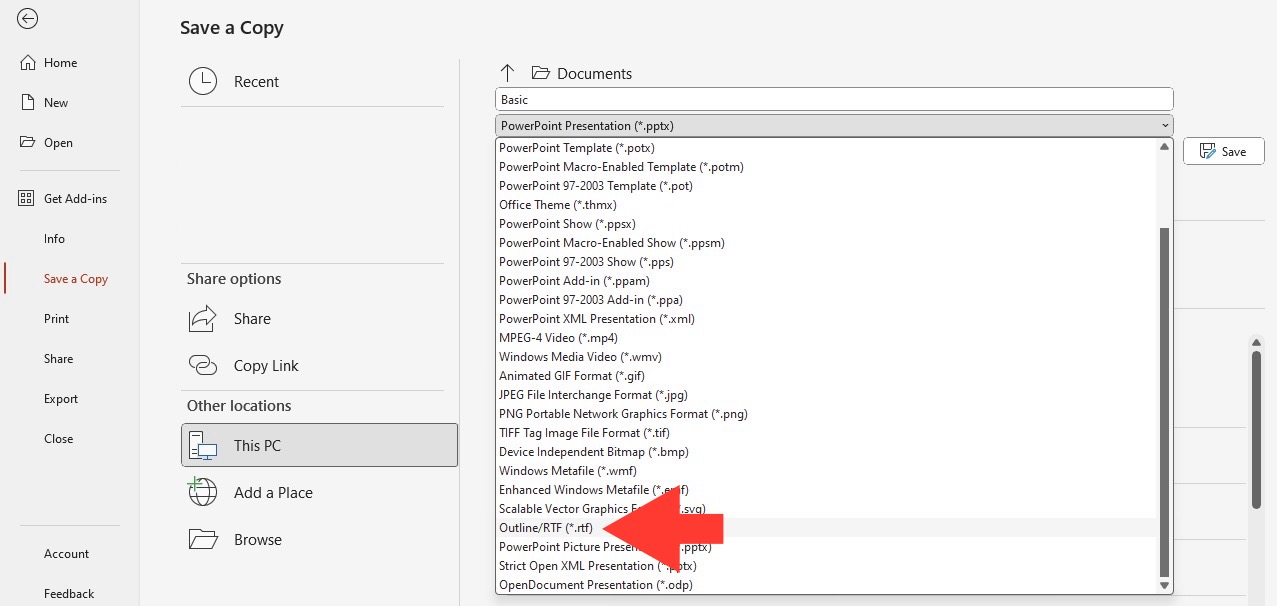
STEP 4: Click ‘Save,’ and they’ll have a text-only outline of the presentation, which can be opened in a word processor for further editing or printing.
How to print a PowerPoint presentation with lines?
STEP 1: Go to ‘File’ and then ‘Print’.
STEP 2: Under ‘Settings’, use the second drop-down menu to choose ‘Notes Pages’.
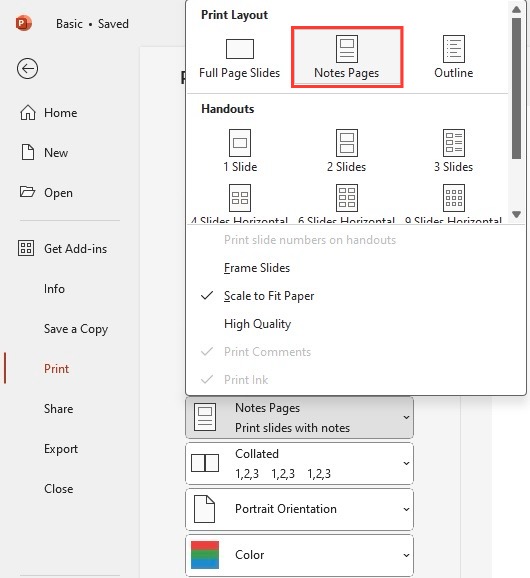
STEP 3: Adjust any other settings as needed and hit ‘Print’.
How to Make Sure that All Text from Slides is Included in the Outline?
- Insert all text into the Title or Body Text placeholders.
- Avoid using non-placeholder text boxes.
- Check the ‘Selection Pane’ to make sure no text is hidden or set behind other objects.
- Review the Outline View before printing.
How to make the outline easier to read?
Use clear fonts, proper spacing, and simple language.

John Michaloudis is a former accountant and finance analyst at General Electric, a Microsoft MVP since 2020, an Amazon #1 bestselling author of 4 Microsoft Excel books and teacher of Microsoft Excel & Office over at his flagship MyExcelOnline Academy Online Course.

 30 Days - Full Access