Free Practice Workbook
When working with statistical data, it is important to know how to calculate the t-statistic in Excel. T test allows users to compare sample means and assess hypotheses. In this article, you will learn how to calculate the test statistic using Excel.
Key Takeaways:
- A t-test is used to check if the two sets of data are different.
- Data Analysis ToolPak can be used to run t-tests.
- Outliers or incorrect data can skew your results.
- The t-statistic and p-value help you understand the test outcome.
- Compare the p-value with 0.05 to decide if the result is significant.
Table of Contents
What is a T-Test?
T test can be used to compare two sets of data to see if they’re statistically different. It is a type of hypothesis test that helps me determine whether:
- The means of the two datasets come from different populations; or
- If any observed difference is due to random chance.
Getting Started with Excel’s T-Test Tool
Preparing Your Data for T-Test
Before jumping into performing a T-Test in Excel, getting your data in tip-top shape is crucial. This means you’ll need to organize your data into a clean, orderly format.
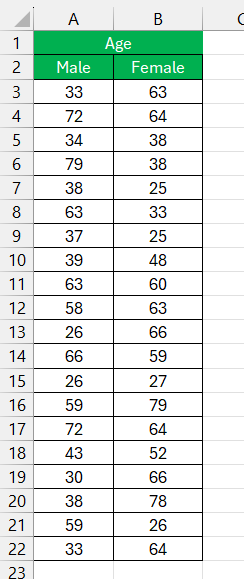
It’s vital to remove any outliers or incorrect data points that could skew your results. These are often easier to identify once your data is neatly lined up. Also, make sure your data does not have any missing values, as this could invalidate your analysis.
Install the Data Analysis ToolPak
STEP 1: Open Excel and click on File > Options.

STEP 2: Select Add-ins > Excel Add-ins. Click Go.
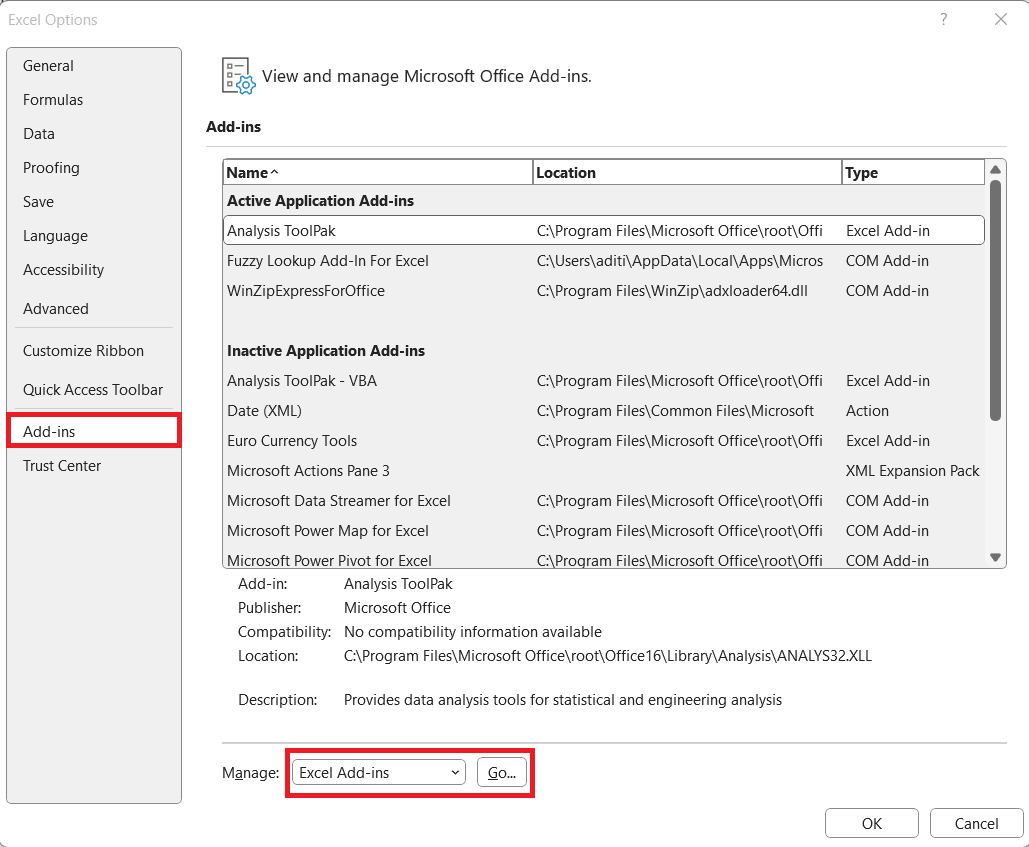
STEP 3: In the pop-up window, tick the checkbox for Analysis ToolPak. Click OK.
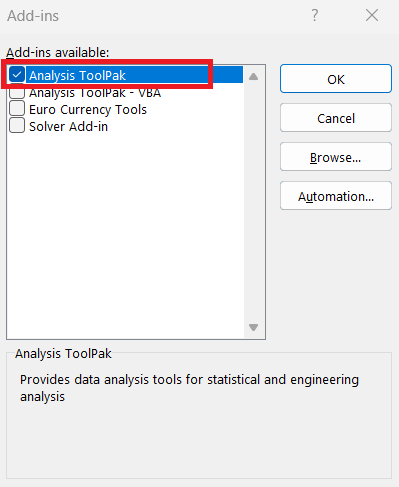
The Data Anlysis button will appear on the Data tab.

How to Calculate T-Test in Excel
STEP 1: Click the Data tab and select Data Analysis.

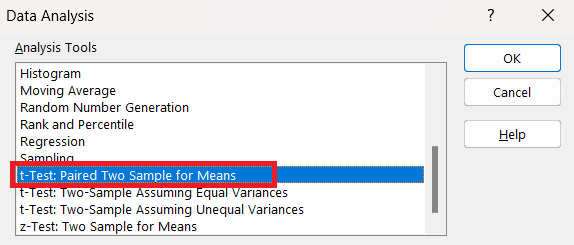
STEP 2: From the analysis options, select ‘t-Test: Paired Two Sample for Means’. Click OK.
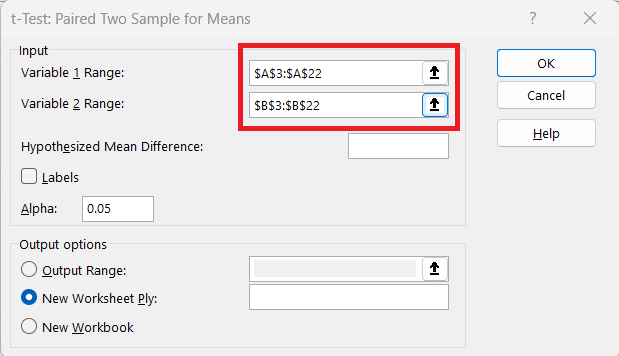
STEP 3: Enter the input ranges.
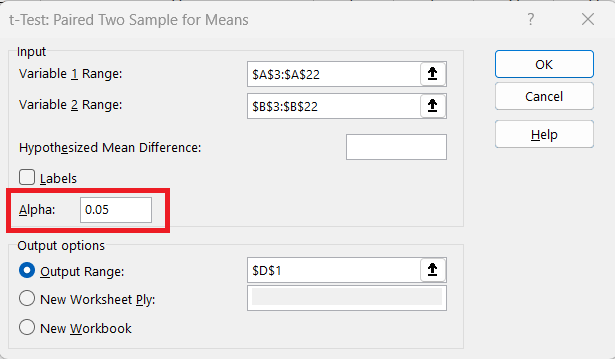
STEP 4: Input the Alpha value, It is typically 0.05 for a 95% confidence level.
Excel will provide you with the T-Test’s results, including the t statistic value.
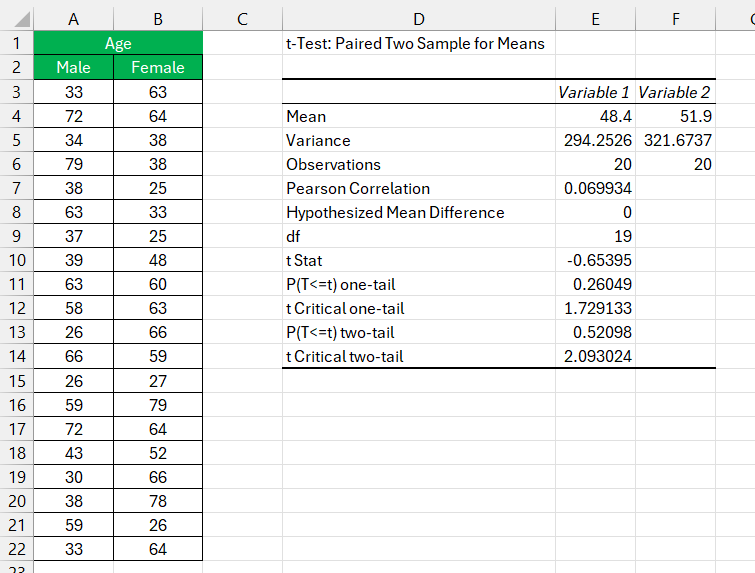
Interpret T-Test Results
Understanding the Test Statistic Value
The test statistic value is a number that helps you determine the significance of your test results. This value represents the ratio of the difference between the group means to the variation that exists within the groups. In simpler terms, it’s a measure of how far apart the groups are when taking into account the spread of scores within the groups.
A higher value could indicate a more significant difference between the group means. You will have to compare it against a critical value from the T distribution to assess significance.
P-Value and Hypothesis Testing
The p-value tells a story about your hypothesis test in Excel. It quantifies how likely your test results are if the null hypothesis were true.
- Compare the p-value to your alpha level, usually set at 0.05. If it’s smaller, this suggests there’s enough evidence to reject the null hypothesis.
- A p-value larger than the alpha level means there isn’t enough evidence to do so.
Remember, a lower p-value means there’s a stronger case against the null hypothesis.
FAQs
What is a t-statistic in Excel?
A t-statistic is a value used to compare two datasets. It can check if the means of the two datasets are different.
How to find the test statistic in Excel?
You can find the test statistic in Excel by using the T.TEST function or using the Data Analysis ToolPak.
Can Excel Perform All Types of T-Tests?
Yes, Excel can perform the following t-tests using the T.TEST function:
- One-sample
- Two-sample
- Paired-sample
How to Make Sure that the Data is Suitable for a T-Test?
The data should be normally distributed, the samples are independent, and the variances are equal or similar.
What to Do If the T-Test Results Are Inconclusive?
If your t-test results are inconclusive, try these:
- Increase your sample size
- Check for data errors
- Use a non-parametric test like the Mann-Whitney U test.

John Michaloudis is a former accountant and finance analyst at General Electric, a Microsoft MVP since 2020, an Amazon #1 bestselling author of 4 Microsoft Excel books and teacher of Microsoft Excel & Office over at his flagship MyExcelOnline Academy Online Course.

 30 Days - Full Access