Free Practice Workbook
When working with a Pivot Table, the field list is an important tool that lets you edit the Pivot Table. It allows you to choose fields that will appear in the Pivot and also arrange them. Sometimes, the field list may disappear or may be placed in an inconvenient location. In this article, you will learn how to activate, move, or resize the Pivot table field list.
Key Takeaways:
- Use the Field List to add, remove, and arrange Pivot Table fields.
- Show or hide the Field List from the PivotTable Analyze tab or right-click menu.
- Move, dock, or resize the Field List to suit your workspace.
- Choose different layouts for the Fields and Areas sections.
- Managing the Field List makes Pivot Table editing easier.
Table of Contents
Introduction to Pivot Table Field List
What is Field List?
The Pivot Table Field List is a task pane that appears whenever you select a Pivot Table. It contains all the fields (columns) from your source data and allows you to build and modify your Pivot Table by dragging fields into different areas.
The four areas are:
- Filters
- Columns
- Rows
- Values
Without the Field List, editing a Pivot Table becomes much more difficult.
Why is the Field List Missing?
Sometimes the Field List disappears because:
- You accidentally closed it.
- You clicked outside the Pivot Table.
- Excel temporarily hid it.
- The workbook opened with the Field List disabled.
Getting Your Field List Options
STEP 1: Right-click on your Pivot Table and select Show Field List
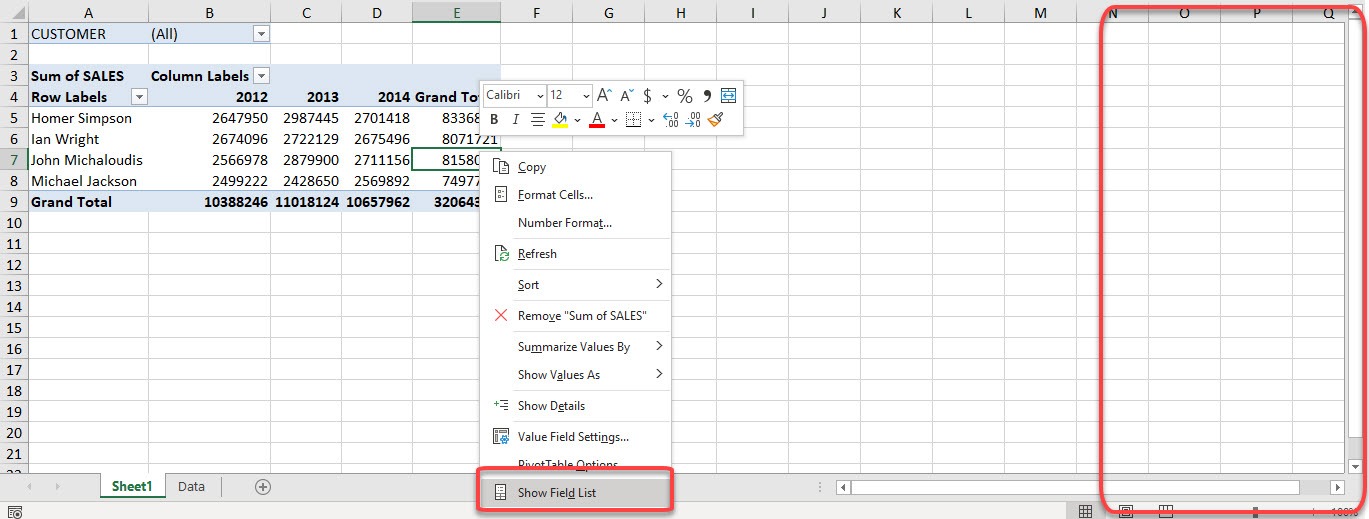
Or, you can go to the PivotTable Analyze tab and select Field List.

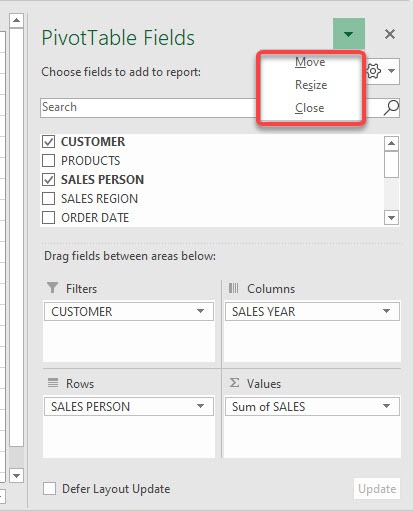
STEP 2: Click on the down arrow and you get these options: Move, Resize and Close.
You can either move it to anywhere on your sheet, expand the panel, or make it hidden again.
STEP 3: Click on the Gear icon and you will be able to change the layout of your Field List.
The default one we are using is the first one: Fields Section and Areas Section Stacked.
Let us have a look at the other layout options!
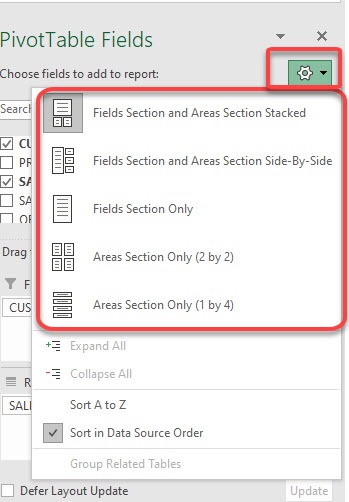
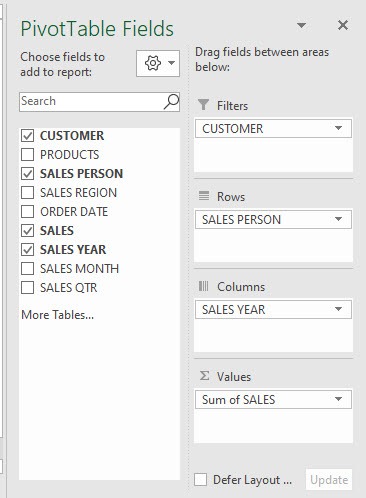
Fields Section and Areas Section Side-By-Side:
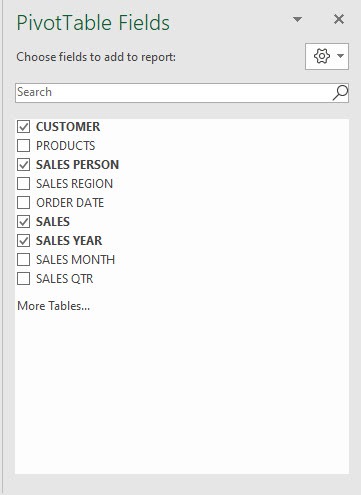
Fields Section Only:
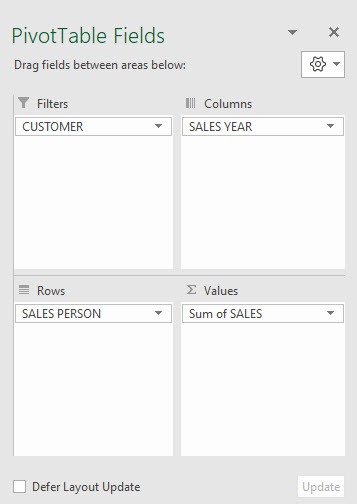
Areas Section Only (2 by 2):
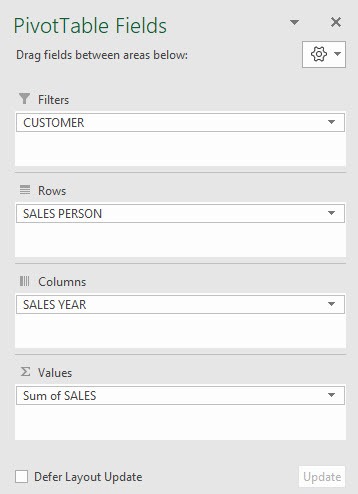
Areas Section Only (1 by 4):
Additional Field List Tips
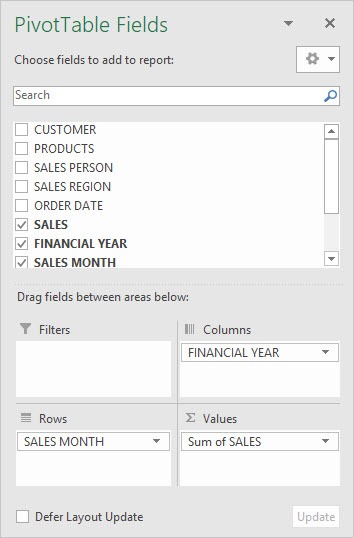
To show the field list, Right Click on your Pivot Table and select Show Field List.
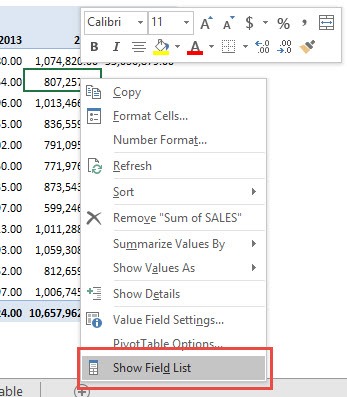
Your PivotTable Field List (renamed to PivotTable Fields in Excel 2013 and onwards) is now showing!
Let us show in the next step how to hide this.
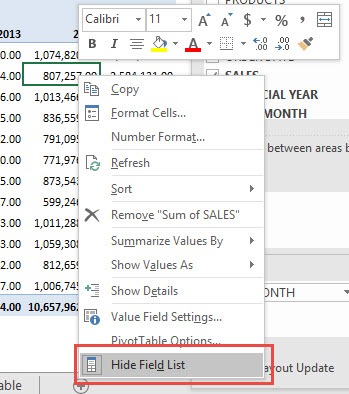
To hide the Field List, Right Click on your Pivot Table and select Hide Field List.
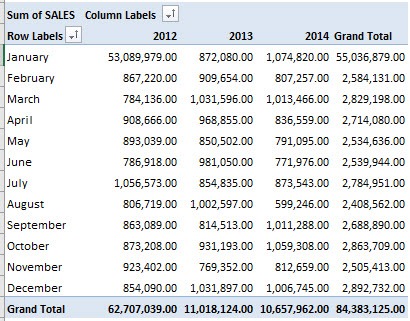
Your Pivot Table Field List is now hidden!
Using Ribbon
The field list for Pivot Table can easily be toggled on and off using the ribbon menu.
- Click on any cell in the Pivot Table.
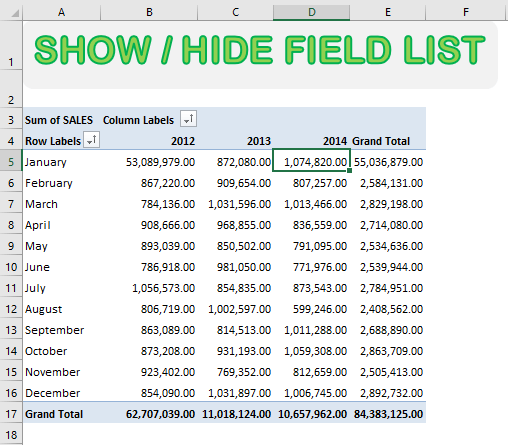
- Go to PivotTable Analyze > Field List.

The field list will appear next to the Pivot Table!
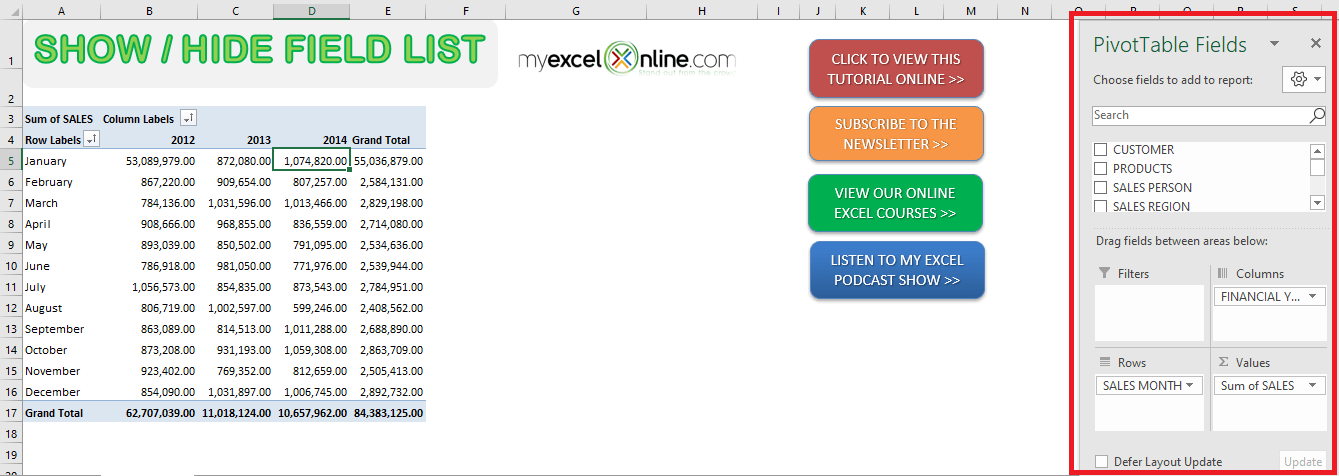
You can hide the list using the same steps.
- Go to PivotTable Analyze > Field List.

This will hide the field list section from the worksheet!
FAQs
1. Why is my Pivot Table Field List not showing?
The Field List may be hidden. Click anywhere inside the Pivot Table, then go to PivotTable Analyze > Field List, or right-click the Pivot Table and choose Show Field List.
2. Can I move the Pivot Table Field List?
Yes. Click the drop-down arrow on the Field List and choose Move, or drag the pane to a different location on your screen.
3. How do I resize the Field List?
Select Resize from the Field List menu, or drag the edges of the pane to make it wider or narrower.
4. What are the different Field List layout options?
Excel offers several layouts, including Fields Section and Areas Section Stacked, Side-by-Side, Fields Section Only, and Areas Section Only, allowing you to choose the view that best fits your workspace.
5. Does hiding the Field List affect my Pivot Table?
No. Hiding the Field List only removes the editing pane from view. Your Pivot Table and all its data remain unchanged.

Bryan
Bryan Hong is an IT Software Developer for more than 10 years and has the following certifications: Microsoft Certified Professional Developer (MCPD): Web Developer, Microsoft Certified Technology Specialist (MCTS): Windows Applications, Microsoft Certified Systems Engineer (MCSE) and Microsoft Certified Systems Administrator (MCSA).
He is also an Amazon #1 bestselling author of 4 Microsoft Excel books and a teacher of Microsoft Excel & Office at the MyExecelOnline Academy Online Course.

 30 Days - Full Access