We know that Microsoft Excel has different features across different versions, and there are several Excel versions, like Excel 2003, 2007, 2010, 2013, and 2016! So whenever I use Microsoft Excel, I need to check the Excel Version that I am using. And boy, do I get confused about which Excel Version I am using! Not to worry, as I will show you a few cool ways to check the Excel Version that you are using right away!
Key Takeaways
Table of Contents
1. Looking at the Splash Screen
When you click on the Microsoft Excel icon on your computer, it starts to load and displays a starting screen.
This screen is shown for few seconds only but it displays the name of the application that you are using and the version that you are using.
Microsoft Excel 365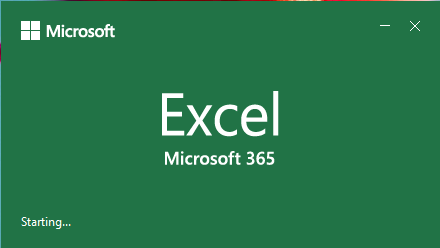
2. Looking at the Menu
You can easily check Excel version you are using by looking at the menu or the top ribbon.
Open any Microsoft Excel file and look at the top left corner of the file. Depending on how the File button looks, you can easily identify the version of Excel.
Microsoft Excel 2016
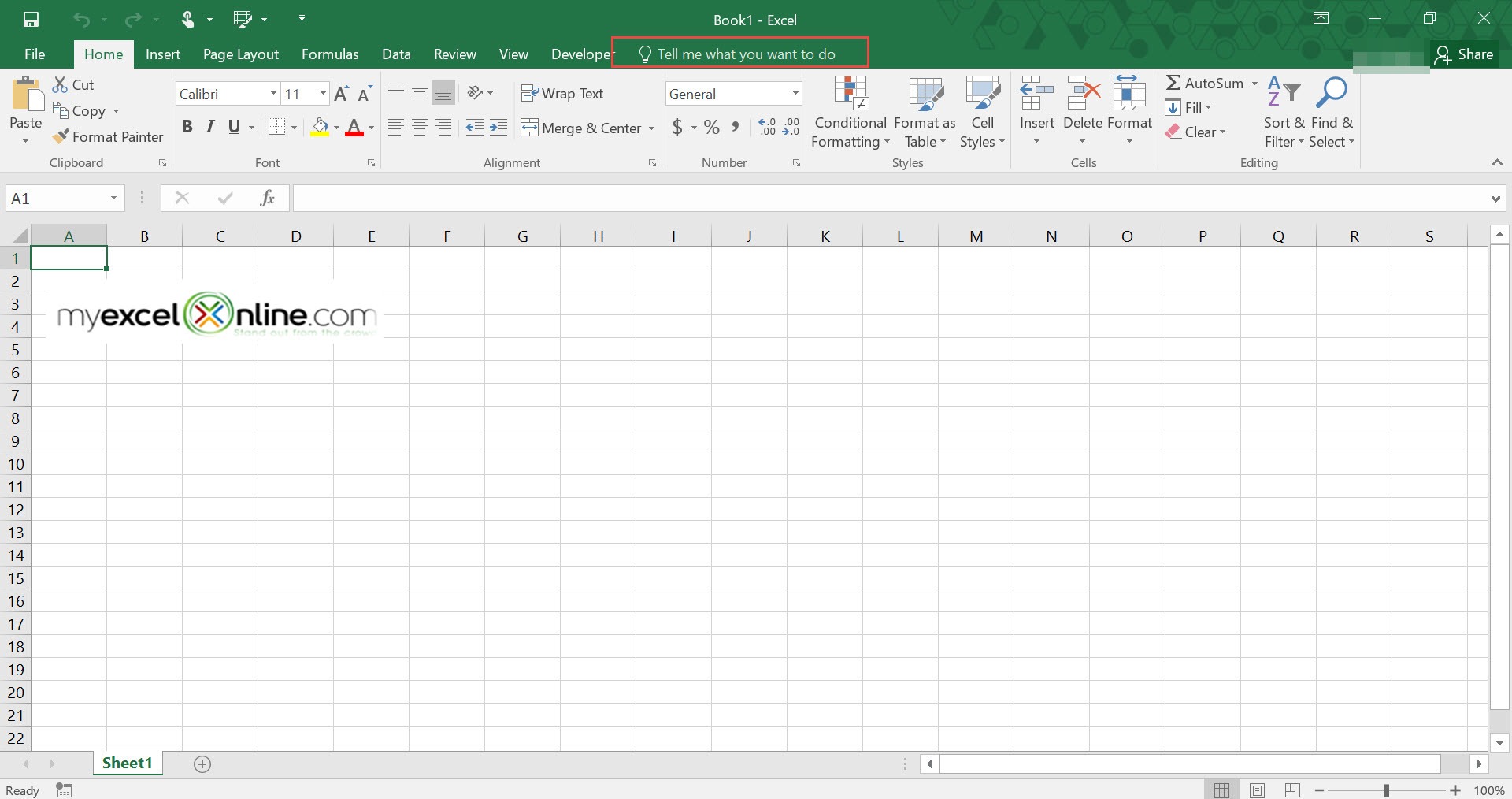
For Microsoft Excel 2016, you can easily spot the difference. You can see the “Tell me what you want to do” text at the top.
It is the only Excel version with this feature. For any other version, this text is not available.
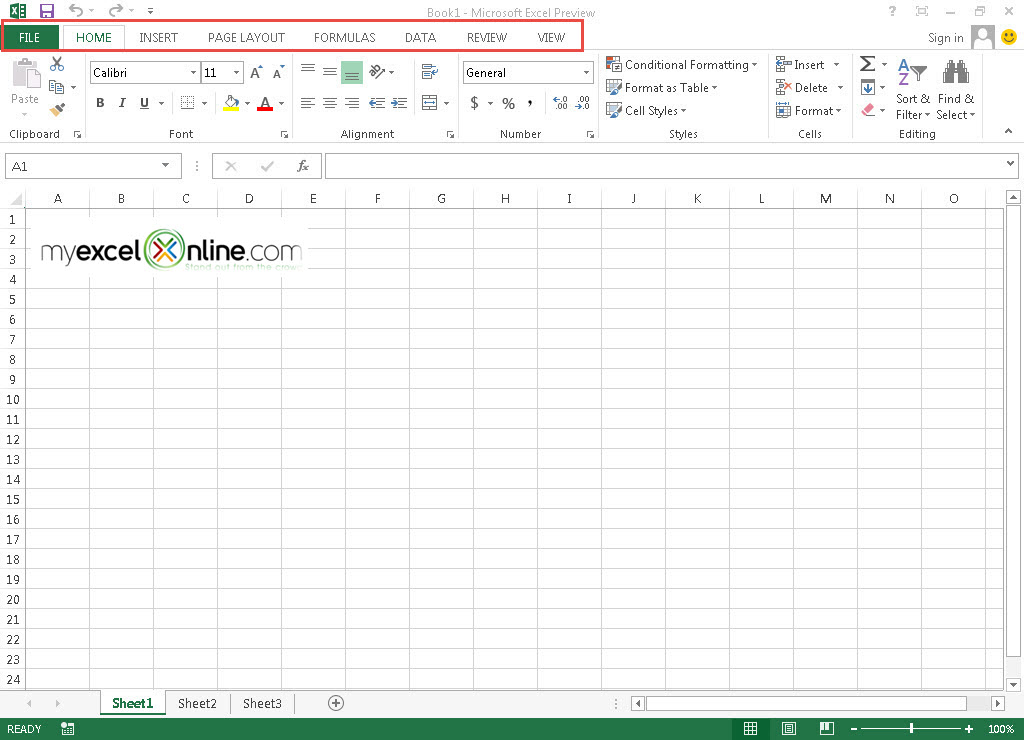
Microsoft Excel 2013
If you are using Microsoft Excel 2013, you can see that the Ribbon tabs are all in Capital Letters!
If it is not in capital letters, you are probably using some other version of Excel.
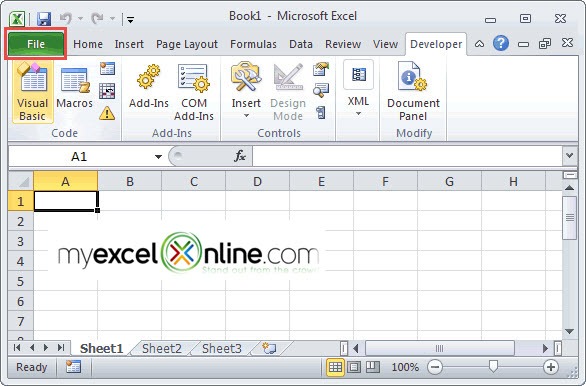
Microsoft Excel 2010
For Microsoft Excel 2010, you can see the Rounded File Menu Button at the top left-hand corner.
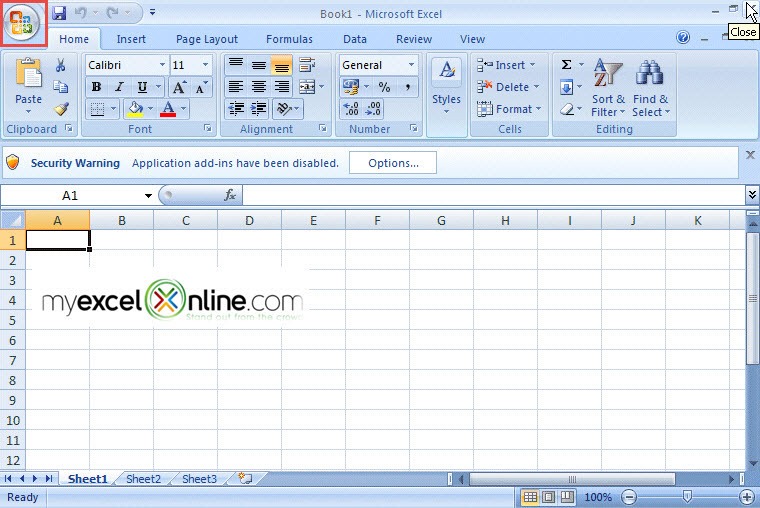
Microsoft Excel 2007
For Microsoft Excel 2007, you can see the Rounded Microsoft Office Icon at the top left-hand corner.
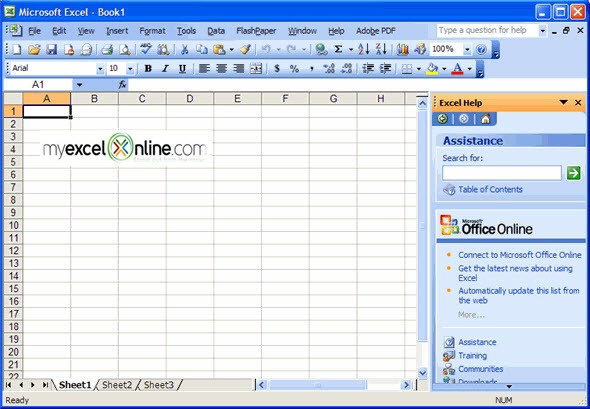
Microsoft Excel 2003
For Microsoft Excel 2003, the giveaway here is it looks like Windows XP!
And this means you already need an upgrade!
3. Checking Help or About Information
Even though the above 2 methods are quick and easy, they do not provide complete information like:
- Whether you use a 64-bit or 32-bit version
- Exact Product Version
- Build Number
You can check all of this information by choosing either the help or about option in Excel:
Microsoft Excel 2016:
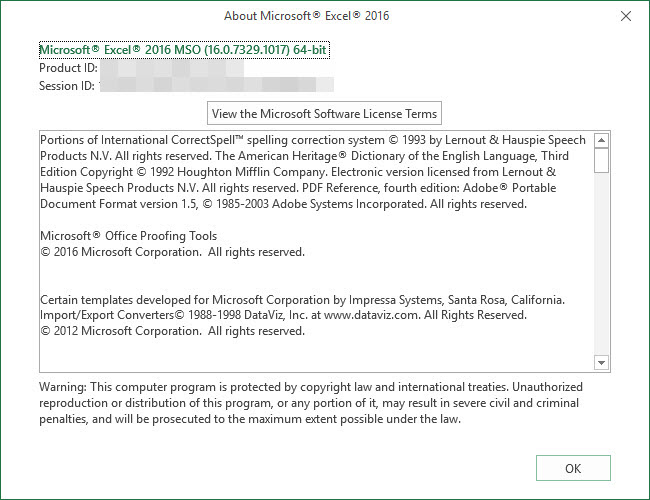
Go to File > Account > About Excel.
Here is what it looks like in Excel 2016:
Microsoft Excel 2013:
Go to File > Account > About Excel
Microsoft Excel 2010:
Go to File > Help > About Microsoft Excel
Microsoft Excel 2007:
Click on Rounded Microsoft Office Icon > Excel options. In the Excel Options dialog box, Select Resources > About button.
Microsoft Excel 2003:
In the menu go to the Help tab and then click on About Microsoft Excel
(If you do not see this option in the menu you are probably using Excel 2007 or higher!).
For Mac
It is actually quite simple to gather information regarding and check Excel Version in Mac.
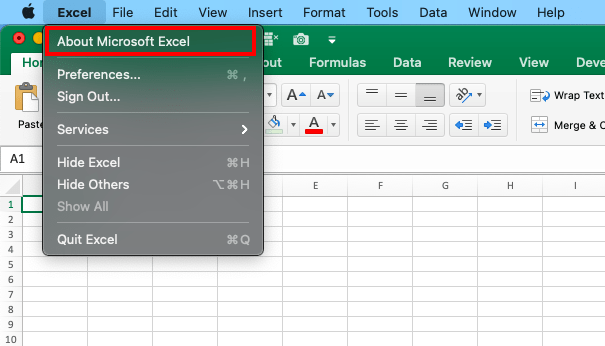
Click on Excel on the Mac Menu Bar and then select About Microsoft Excel.
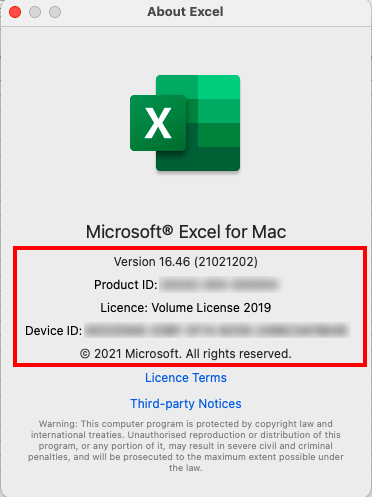
In the About Excel dialog box, all details will be displayed!
Frequently Asked Questions
How can I quickly check my Excel version when opening the application?
When you launch Excel, the splash screen briefly displays the version number at the bottom. If you miss it, you can use other methods like checking the menu or About section.
How does the menu layout help identify the Excel version?
Different Excel versions have distinct menu designs. If your Excel has a File tab with a Backstage View, it’s likely Excel 2010 or later. Older versions, like Excel 2007, have the Office Button instead of the File tab.
Where to find the exact version and build number of Excel?
To find the version and build number of Excel:
- Go to the File Tab.
- Select Account > About Excel
This section provides the full version number and build details.
Can I check my Excel version using VBA?
Yes, you can run a VBA macro to display the Excel version. Open the Visual Basic Editor (Alt + F11), insert a module, and enter MsgBox Application.Version to get the version number.
Why is it important to know my Excel version?
Knowing your Excel version helps ensure compatibility with certain features, formulas, and add-ins. It also helps troubleshoot issues or confirm whether you need to update to a newer version.

Bryan
Bryan Hong is an IT Software Developer for more than 10 years and has the following certifications: Microsoft Certified Professional Developer (MCPD): Web Developer, Microsoft Certified Technology Specialist (MCTS): Windows Applications, Microsoft Certified Systems Engineer (MCSE) and Microsoft Certified Systems Administrator (MCSA).
He is also an Amazon #1 bestselling author of 4 Microsoft Excel books and a teacher of Microsoft Excel & Office at the MyExecelOnline Academy Online Course.

 30 Days - Full Access