Excel has a built-in calculator to perform quick calculations. But this feature is by default hidden and can be added easily to the Quick Access Toolbar for easy access. In this guide, you will learn how to add calculator to the Excel toolbar.
Key Takeaways:
- The Calculator command is hidden by default in Excel.
- You can add it to the Quick Access Toolbar in just a few clicks.
- The Calculator can quickly add, subtract, multiply, and divide selected cells.
- It works independently of Excel formulas.
- You can remove it from the toolbar anytime if you no longer need it.
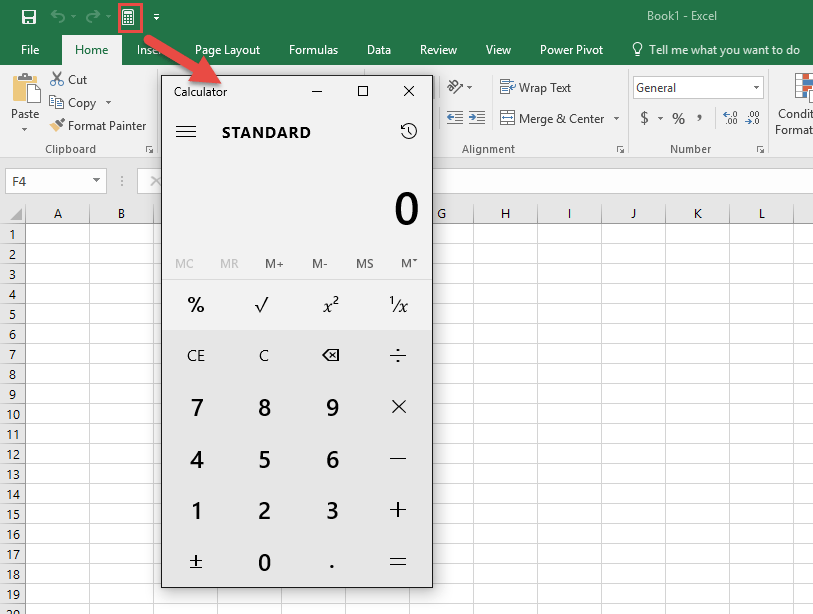
Table of Contents
What is QAT?
Quick Access Toolbar (QAT) is located at the top-left portion of the Ribbon, where you can access the commonly used functions and commands of Excel. To learn more about how to use QAT, go through the tutorial here.
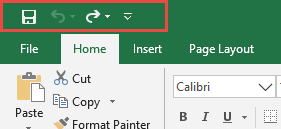
By default, the only options available in QAT are Save, Undo, and Redo. But it can be customized individually by Excel users. So, if you are one who frequently uses the Calculator App with Excel. Adding a calculator to your QAT would be a perfect step!
How to Add Calculator to QAT
STEP 1: Go to the top-left corner of the Excel Ribbon and click the down arrow on the Excel Toolbar.
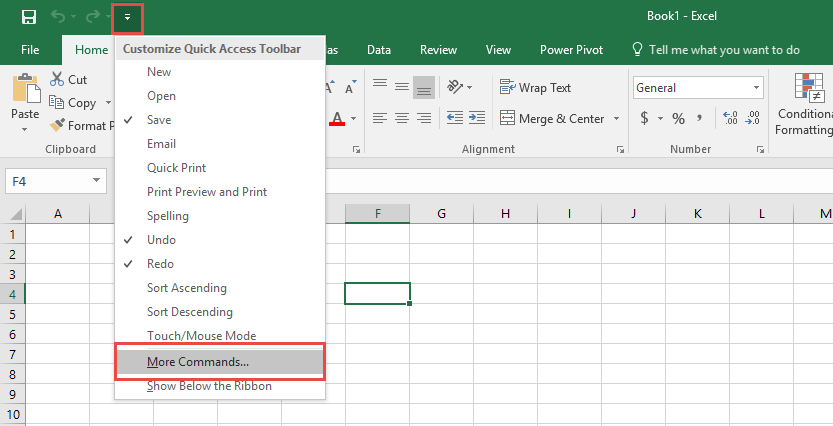
STEP 2: From the drop-down menu, select More Commands from the list.
STEP 3: Select Commands Not in the Ribbon.
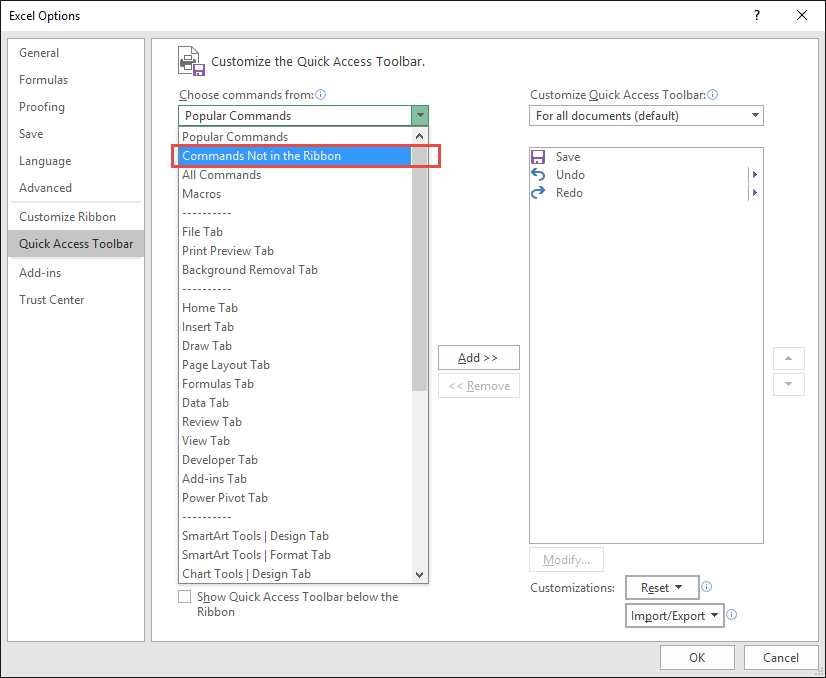
STEP 4: Scroll down and select Calculator. Click Add.
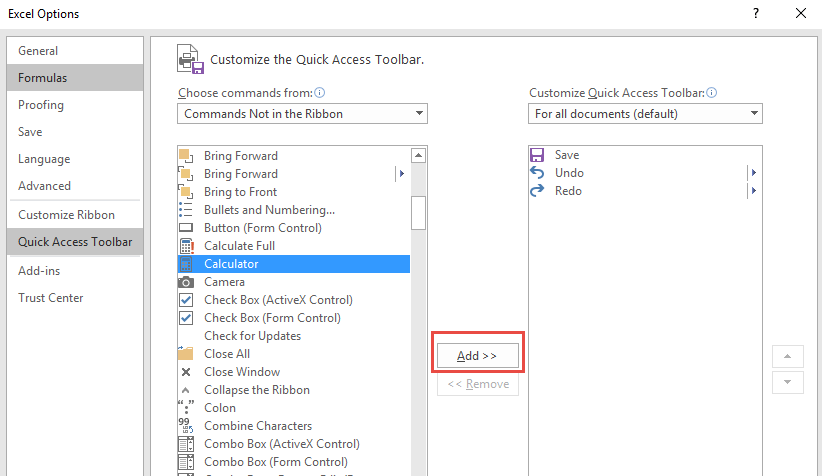
STEP 5: Click OK.
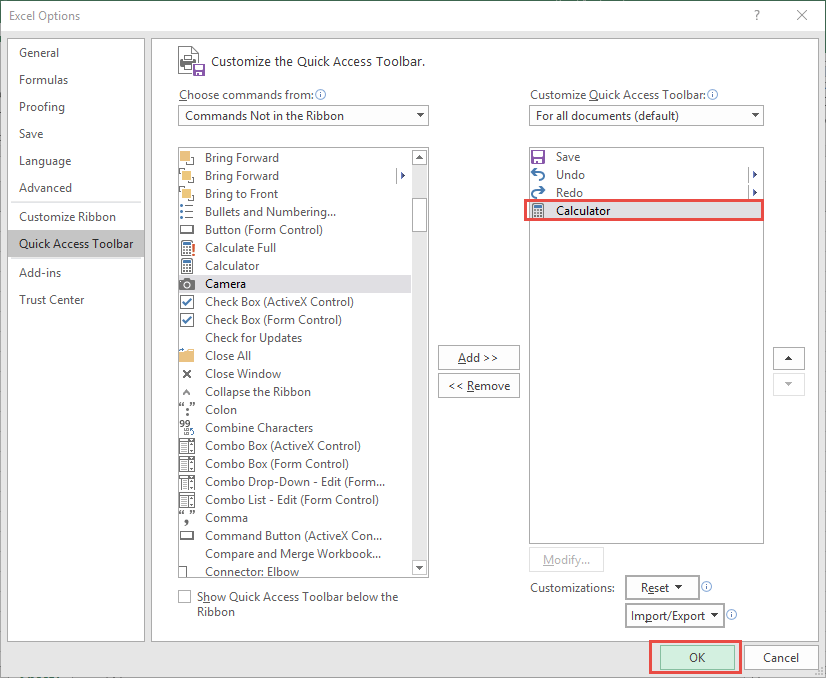
STEP 6: Your Calculator icon is now ready.
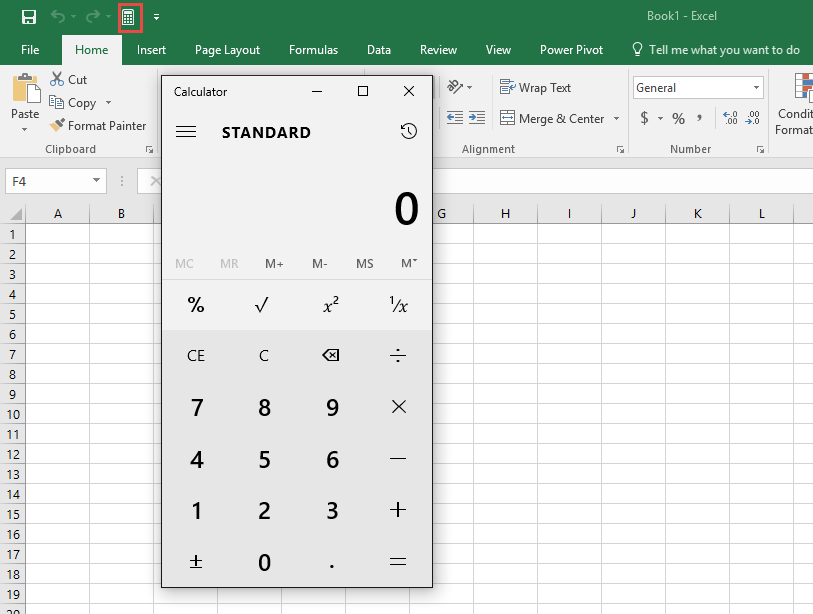
This will add the Calculator option to the Excel Quick Access Toolbar. Give it a try!
How to Remove Calculator from QAT
STEP 1: Go to the top-left corner of the Excel Ribbon and click the down arrow on the Excel Toolbar.
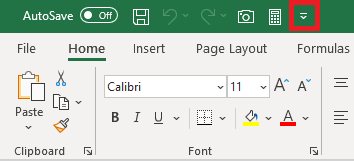
STEP 2: From the drop-down menu, select More Commands from the list.
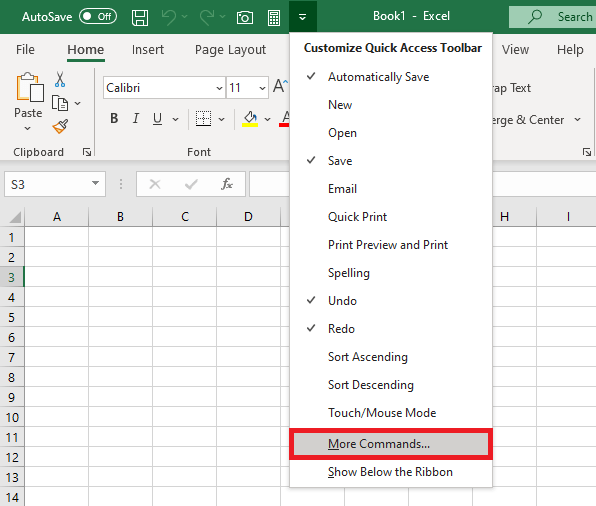
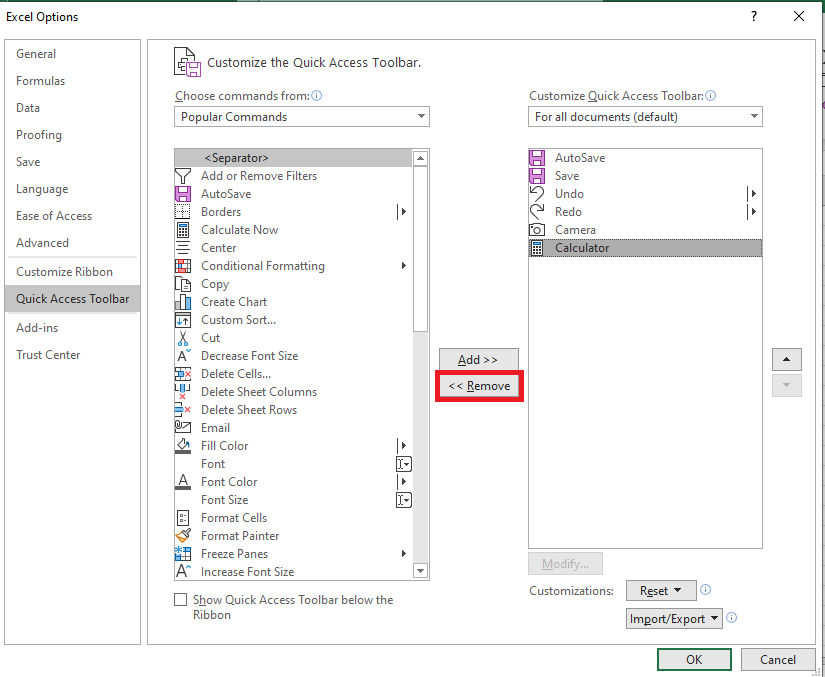
STEP 3: Under Customize Quick Access Toolbar, select Calculator and click on Remove.
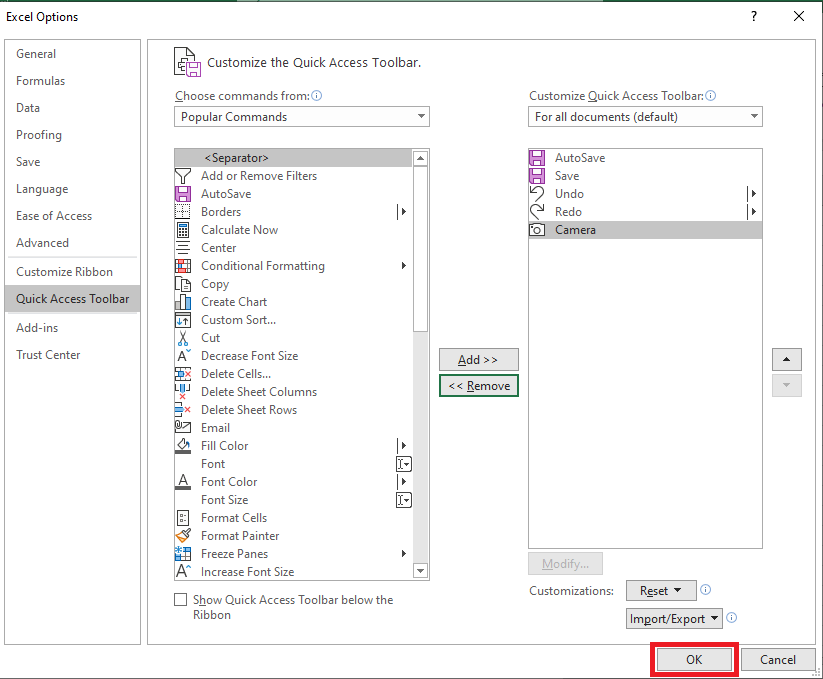
STEP 4: Click OK.
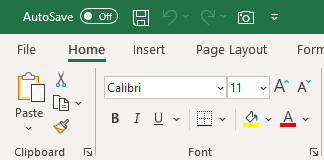
This brings us back to the original QAT composition.
How to Use Calculator in Excel
This calculator tool is an extremely useful tool and does a lot more than just addition and subtraction. There are 4 modes available to use – Standard, Scientific, Programmer, and Date Calculation.
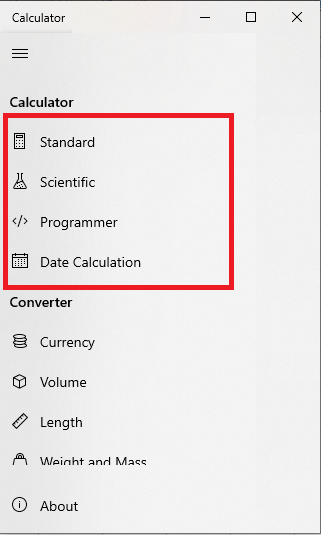
- Standard – It is used for basic math calculations like add, subtract, divide, multiple, finding square root, calculating percentages, and working with fractions.
- Scientific – It is used for functions like log, modulus, exponent, trigonometric degrees, sin, cos, tan, etc.
- Programmer – It is used to switch between different number systems—binary, decimal, hexadecimal, and octal.
- Date Calculation – It is used to calculate the difference between two specific dates.
Now, let’s give it a try and learn how to use a Calculator in Excel.
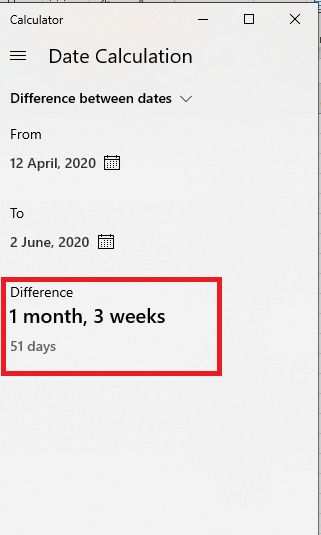
Say, you have to input the difference between two dates – 12th April 2020 and 2nd June 2020 in cell A2 without using any Excel formulas.
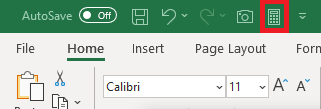
Step 1: Click on the calculator icon in QAT
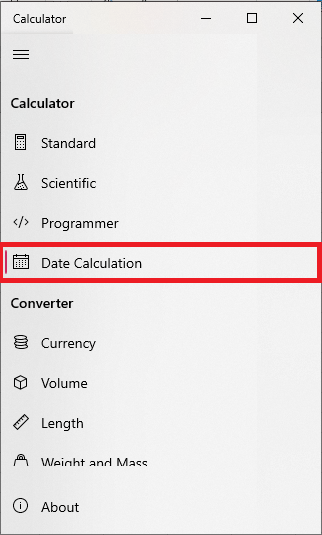
Step 2: Click on the menu button at the top left and then select Date Calculation.
Step 3: Insert the two dates – 12th April 2020 and 2nd June 2020
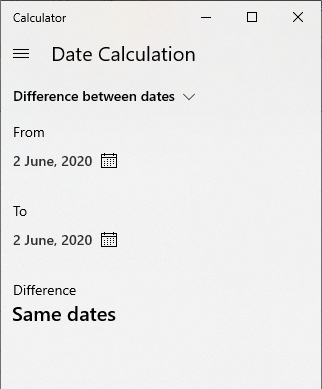
Step 4: The difference between the two dates will be displayed.
Frequently Asked Questions
How can I add a calculator to the Quick Access Toolbar in Excel?
To add a calculator, go to File > Options > Quick Access Toolbar. In the dropdown menu under “Choose commands from,” select Commands Not in the Ribbon. Find and select Calculator, then click Add to include it in the Quick Access Toolbar. Click OK to save the changes.
Can I add the calculator to the Ribbon instead of the Quick Access Toolbar?
Yes, you can add it to the Ribbon. Go to File > Options > Customize Ribbon. Choose a tab or create a new group, then select Commands Not in the Ribbon and add the Calculator to the desired group. Save the changes, and the calculator will appear in the Ribbon.
What if the calculator option does not appear in the command list?
If the calculator is not listed under Commands Not in the Ribbon, ensure your operating system has a built-in calculator application. Excel simply links to your system’s calculator. If unavailable, check if your system’s calculator is installed or accessible.
Can I use this feature in all versions of Excel?
The ability to add a calculator is available in most modern Excel versions, including Excel 2010, 2013, 2016, 2019, and Microsoft 365. However, the exact steps may slightly vary depending on the version.
How does adding a calculator to Excel improve workflow?
Integrating the calculator into Excel saves time by eliminating the need to switch between Excel and a separate calculator app. It’s especially helpful for quick calculations while working on data analysis or financial models.

Bryan
Bryan Hong is an IT Software Developer for more than 10 years and has the following certifications: Microsoft Certified Professional Developer (MCPD): Web Developer, Microsoft Certified Technology Specialist (MCTS): Windows Applications, Microsoft Certified Systems Engineer (MCSE) and Microsoft Certified Systems Administrator (MCSA).
He is also an Amazon #1 bestselling author of 4 Microsoft Excel books and a teacher of Microsoft Excel & Office at the MyExecelOnline Academy Online Course.

 30 Days - Full Access