Free Practice Workbook
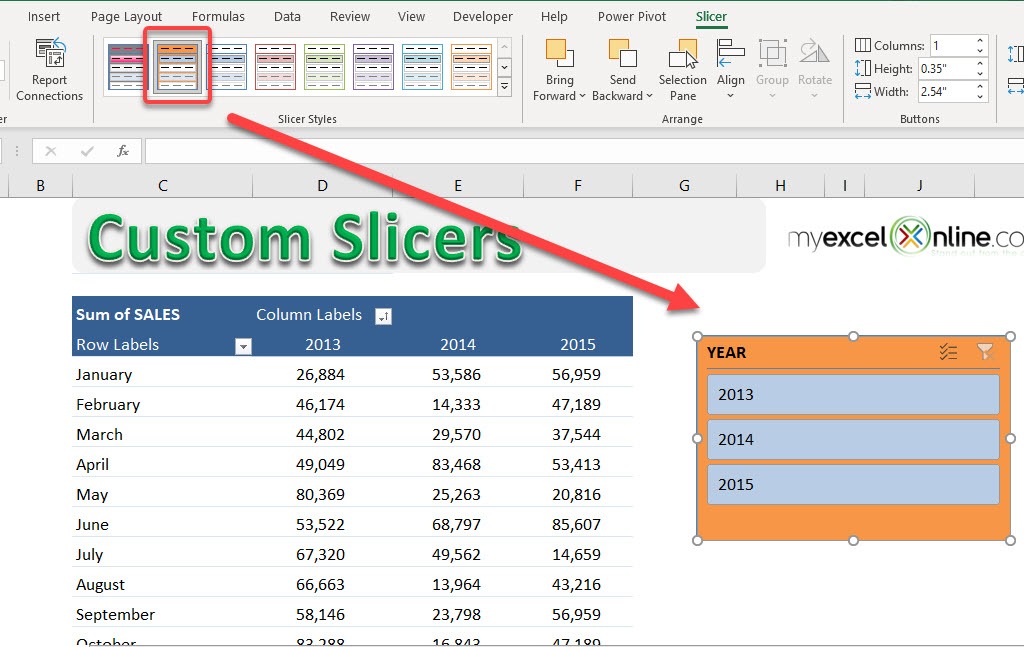
A default slicer in Excel is very boring-looking, but you can choose from 14 different slicer styles. It ranges from light to dark and a few more colors to choose from. In this article, you will learn how to customize an Excel slicer.
Key Takeaways:
- You can customize a slicer using the Slicer tab.
- Duplicate an existing style before making changes.
- Edit individual slicer elements to change their appearance.
- Save your custom style for future use.
- Apply the new style from the Slicer Styles
Table of Contents
What is an Excel Slicer?
A Slicer is a visual filter that allows you to filter data in Excel. It displays filter options as clickable buttons, so you can quickly see which items are selected.
Slicers were introduced in Excel 2010 and are also available in Excel for Mac 2016 and later. They provide a faster, more interactive way to analyze data than standard Pivot Table filters.
You can also customize a slicer by changing its style, colors, fonts, and button formatting to match the look of your workbook.
How to Customize an Excel Slicer
STEP 1: You need to select the Excel Slicer and go to the Slicer tab
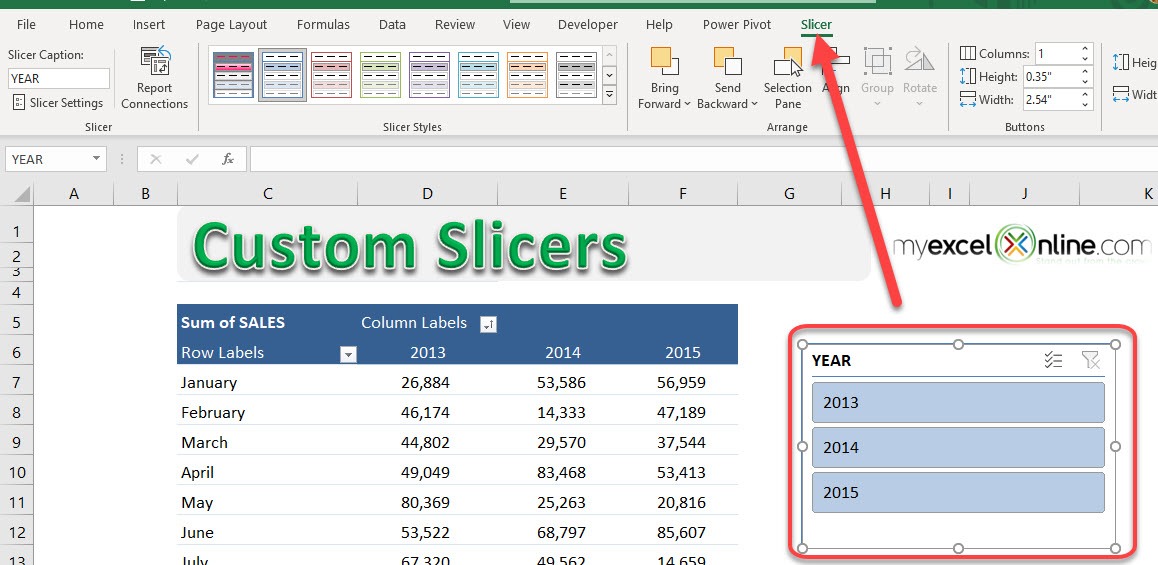
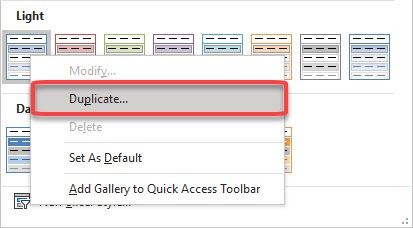
STEP 2: Under the Slicer Styles drop down, Right Click on the highlighted Slicer and choose Duplicate
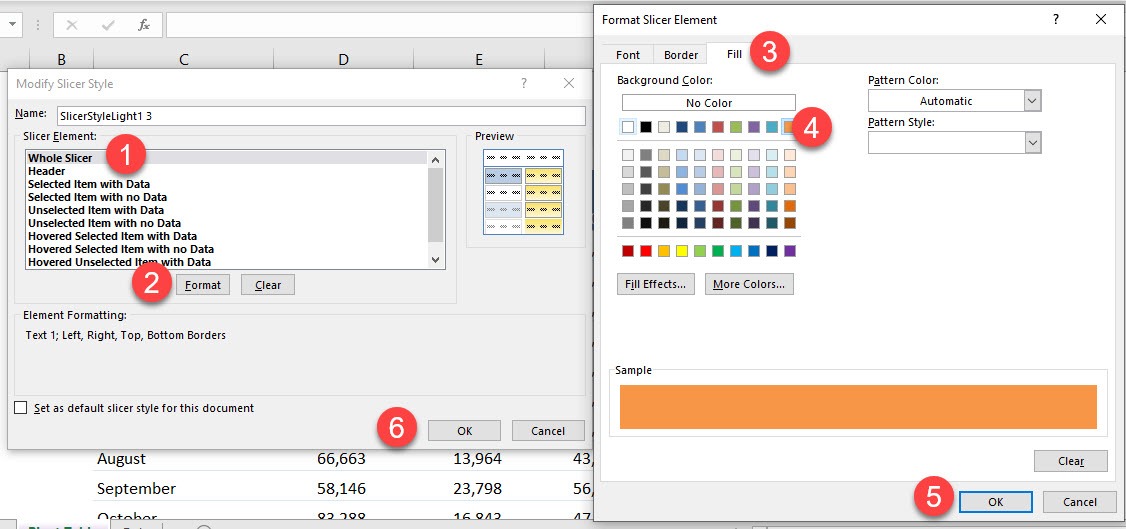
STEP 3: Select a Slicer Element and click on the Format button;
There are several Slicer Elements that can become very confusing. I have tried to explain the different options with images in this Downloadable Workbook: Slicer elementsSlicer-Elements1.xlsx
Make the necessary formats and then press OK to exit the Modify Slicer Style dialogue box
STEP 4: To see the custom changes you need to select the newly created custom Slicer from the Slicer Styles drop down box.
Best Practices for Customizing Excel Slicers
- Use colors that match your workbook or company branding.
- Choose a font size that is easy to read.
- Make selected items stand out with a different fill color.
- Keep button sizes large enough for easy clicking.
- Use the same slicer style throughout your workbook for a consistent look.
- Avoid using too many bright colors, as they can distract from the data.
- Test your custom style on different datasets to make sure it remains clear and readable.
Frequently Asked Questions
How do I change the color of an Excel slicer?
Go to the Slicer Tools > Options tab, click on Slicer Styles, and select a pre-set style or create a new one by modifying the fill color, border, and font.
Can I adjust the size of slicer buttons?
Yes, you can change the button size by selecting the slicer, going to Slicer Tools > Options, and adjusting the Height and Width under Button Size.
How do I connect one slicer to multiple Pivot Tables?
Select the slicer, click on Report Connections, check the Pivot Tables you want to link, and click OK. This allows filtering multiple Pivot Tables simultaneously.
Can I rename slicer items?
Slicer items reflect the values in your dataset, so to rename them, you must change the source data and refresh the Pivot Table.
How do I prevent a slicer from moving when resizing cells?
Right-click the slicer, select Size & Properties, expand the Properties section, and check Don’t move or size with cells to lock its position.


John Michaloudis is a former accountant and finance analyst at General Electric, a Microsoft MVP since 2020, an Amazon #1 bestselling author of 4 Microsoft Excel books and teacher of Microsoft Excel & Office over at his flagship MyExcelOnline Academy Online Course.

 30 Days - Full Access